


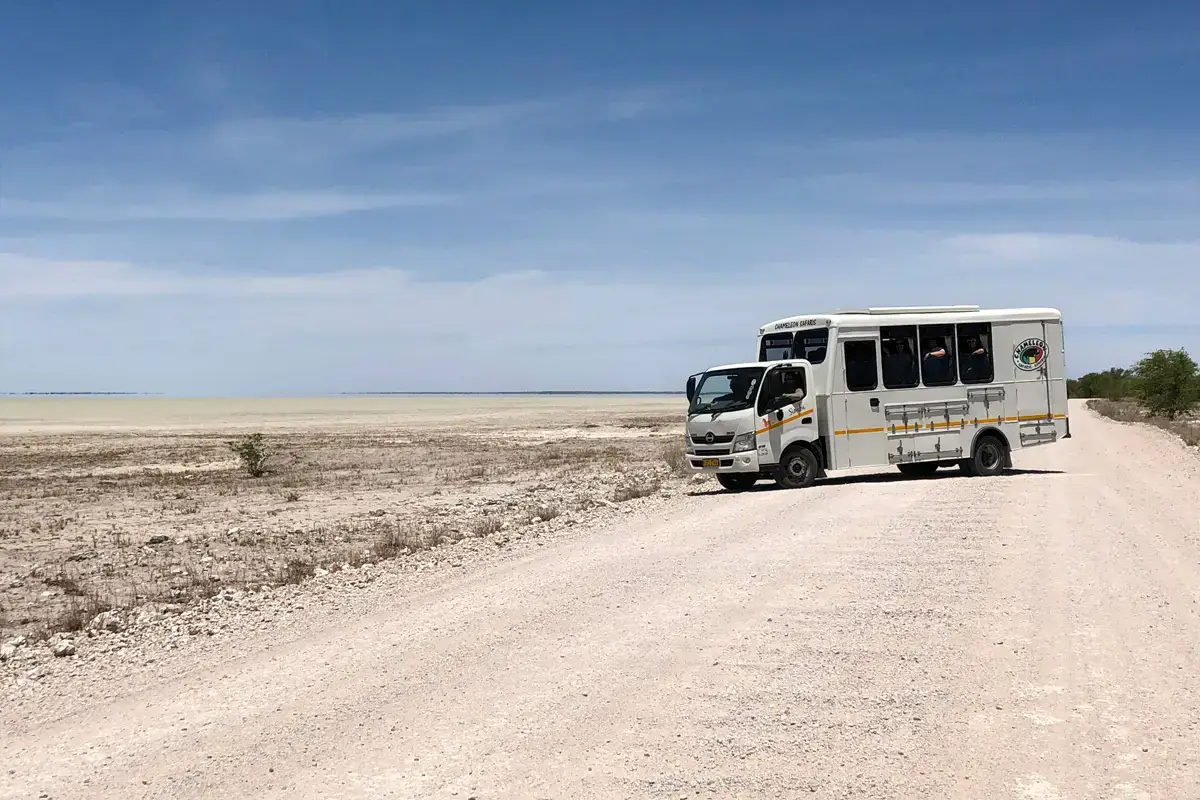
Namibia is built around distance
Driving is part of a safari in Namibia. The country is large, the main highlights are spread out, and many of the most rewarding places are connected by long roads rather than short hops.
This is not a reason to avoid a safari. It is a reason to choose the right length and route. A guided tour means you are not handling the navigation, road conditions, fuel planning or daily logistics yourself.
Why distances feel different in Namibia
A road day in Namibia is not the same as a short transfer in a city. Routes can include gravel roads, remote sections, viewpoints, fuel stops and long stretches of open landscape. Travel time is part of how the country is experienced.
This is especially true on routes that combine Sossusvlei, Swakopmund, Damaraland and Etosha. These places are worth visiting, but they are not next door to each other.
Short safaris can feel busy
A 3-day safari can be excellent, but it will usually be focused and active. You are covering a meaningful distance in a short time. That works when you want one main destination, such as Sossusvlei, but it is not the way to see the whole country.
If you want more variety at a calmer pace, look at 6-, 7-, 10-, or 12-day options. More days usually mean the route breathes better.
Guided travel changes the experience
Self-driving in Namibia can work, but it comes with responsibility: navigation, road conditions, fatigue, fuel stops, vehicle issues and timing. On a guided safari, those pressures are handled by the guide and operator.
That does not remove the distance, but it changes how you experience it. You can look out of the window, ask questions, listen to the guide and arrive without having spent the day concentrating on gravel roads.
How to choose if you dislike long drives
If long drives worry you, do not simply choose the shortest route. Choose the most focused route. A short safari with too many ambitions can feel rushed. A slightly longer route may be easier because it spreads the travel more sensibly.
Look at how many regions the safari includes and how many nights are spent in each place. If the route tries to include dunes, coast, Damaraland and Etosha in very few days, expect a faster pace.
The honest answer
Yes, there is driving. But the distances are part of why Namibia feels so open and different. A good safari does not pretend the country is smaller than it is. It turns the movement into part of the experience.
Use the Safari Selector to compare route lengths, or contact Chameleon if you want help choosing a safari that matches your comfort level with road time.