


Lüderitz is one of Namibia’s more distinctive coastal towns. It sits between the Namib Desert and the Atlantic Ocean, giving it a feeling that is very different from Swakopmund, Etosha or the central highlands.
The town is known for its colourful buildings, German-era architecture and exposed coastal setting. It can feel quiet, windy and slightly remote, but that is part of its appeal.
Lüderitz: desert meets Atlantic
The first thing many visitors notice is the contrast. On one side there is desert. On the other, cold Atlantic water, seabirds and fishing-town character.
Buildings such as Goerke Haus and other historic structures give Lüderitz a strong sense of the past. The town is also a useful base for exploring the surrounding peninsula, coastal views and birdlife.
Kolmanskop: Namibia’s famous ghost town
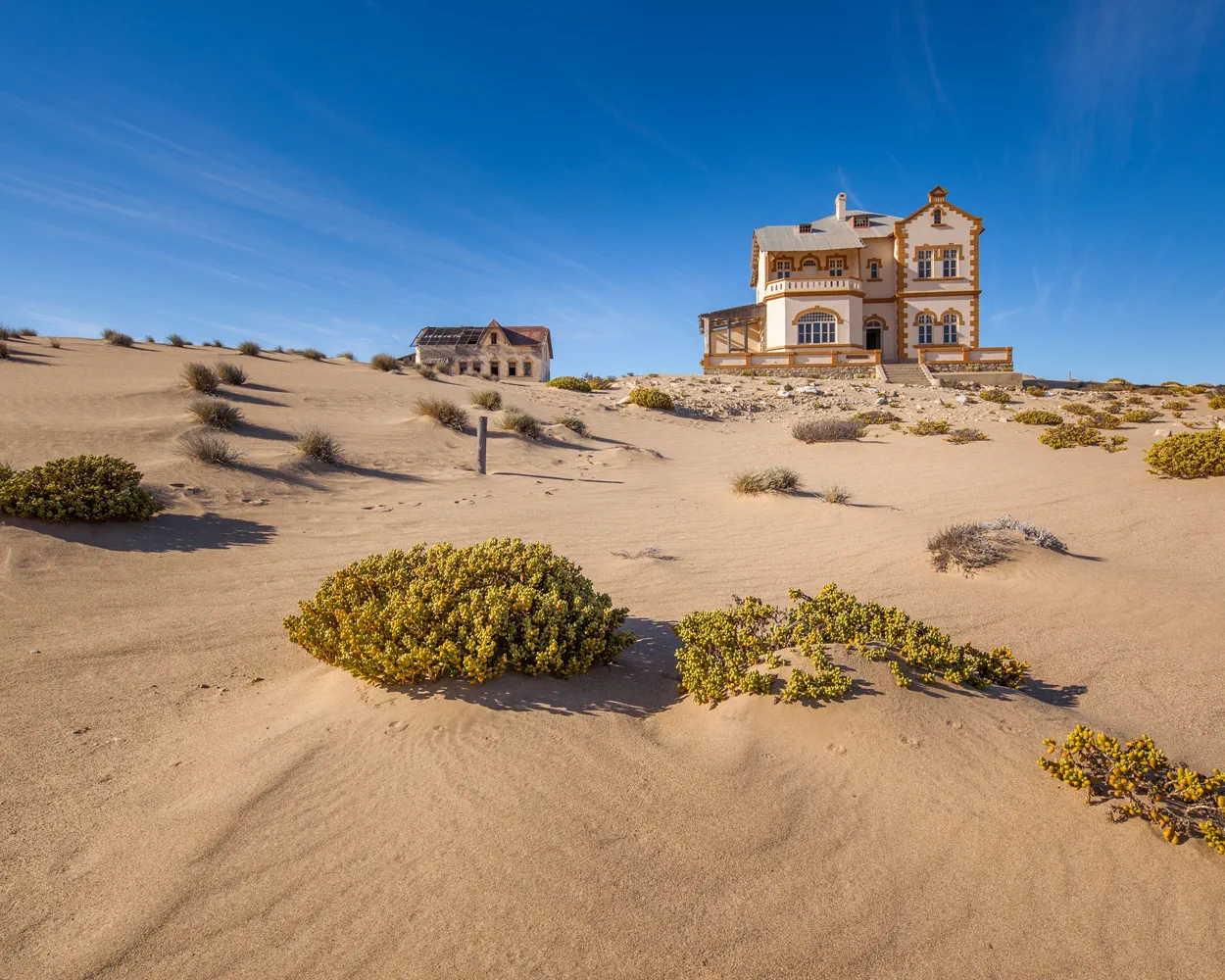
A short drive from Lüderitz, Kolmanskop is the main historic attraction in the area. Once part of Namibia’s diamond-rush story, the town was later abandoned and is now known for its empty buildings and sand-filled rooms.
A guided tour helps make sense of the site. Without the history, it is easy to see only dramatic ruins. With context, Kolmanskop becomes a story about wealth, isolation, ambition and the harshness of the desert.
A strong photography stop
Kolmanskop is one of Namibia’s best-known photography locations. Light moves through broken windows, sand gathers in doorways, and the desert slowly takes back what was built there.
Lüderitz also has photographic appeal: bright buildings, rocky coastline, Atlantic weather and the feeling of a town on the edge of the desert.
Activities around Lüderitz
Depending on time and conditions, visitors may explore the Lüderitz Peninsula, look for seabirds, visit coastal viewpoints or enjoy fresh seafood. Some travellers also use Lüderitz as a base for marine activities, although these depend on season, weather and local operators.
This is not a destination that feels polished or overdeveloped. Its appeal is more unusual: history, atmosphere, coast, desert and a sense of isolation.
Where it fits in a Namibia trip
Lüderitz and Kolmanskop are best suited to southern Namibia routes. They pair naturally with Sossusvlei, Fish River Canyon and other desert landscapes.
For travellers with enough time, the region adds depth to an itinerary. It shows another side of Namibia: not just wildlife and dunes, but coast, history and the remains of a diamond-era town slowly disappearing into the sand.